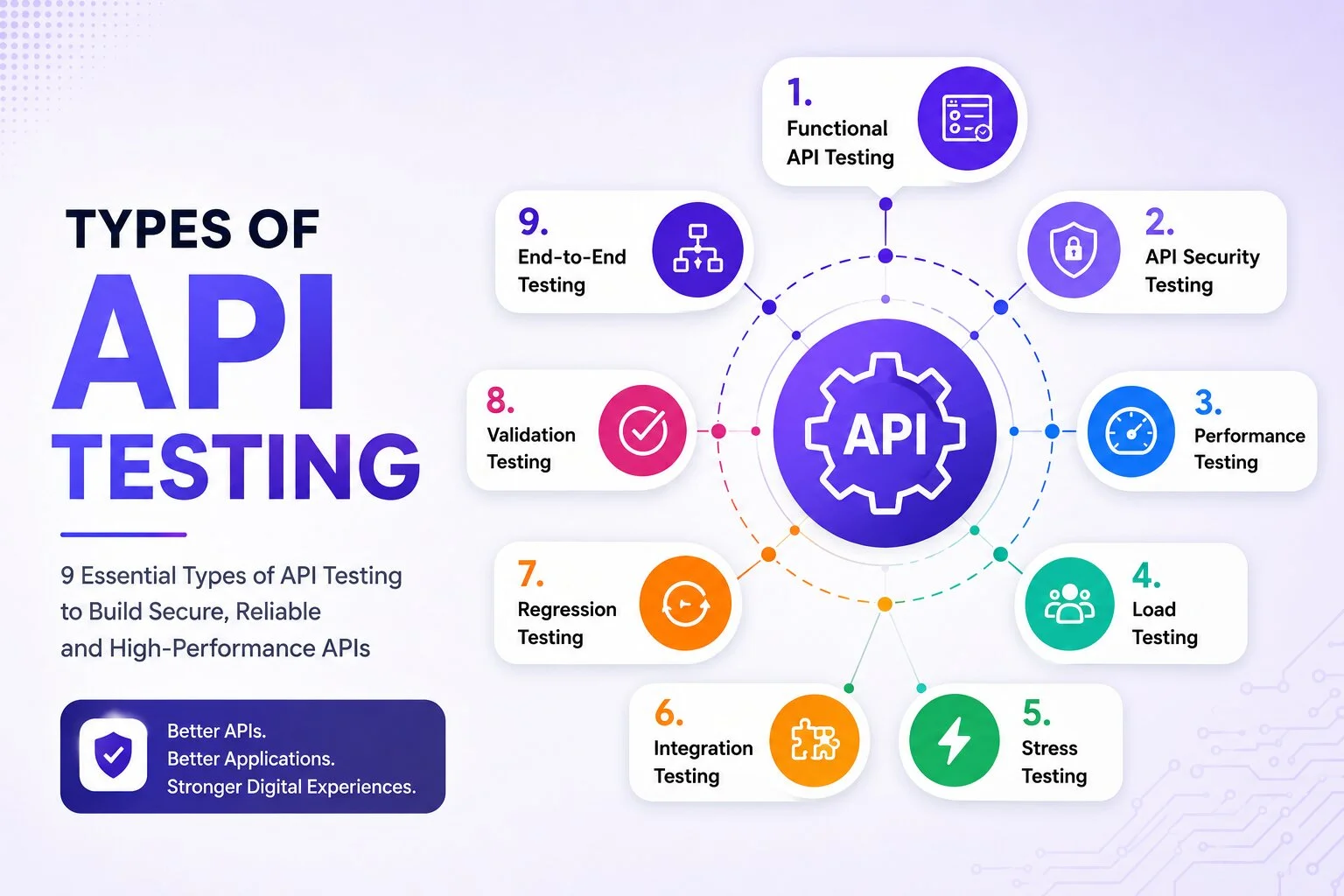
These days modern applications really depend on APIs to connect services and exchange data. This is true for banking apps e-commerce platforms and cloud-based software solutions. APIs are like the backbone of communication between systems. As organizations release features more often it becomes harder to maintain API quality. If an API fails it can cause service disruptions, user experiences & even security breaches.
This is why automated API testing is very important. It's also a part of the software development lifecycle. This allows the testing process to consistently check on the performance of the APIs while cutting down on efforts. Automation testing allows for the faster development process and helps find problems that may occur.
Why Automated API Testing Is Essential
Since application development is going through an agile and DevOps environment, it is important that the testing phase adapts quickly to keep pace with the rapid releases. Manual testing is not enough & unable to meet the speed & monitoring required for modern applications. Automated testing API solves this challenge by enabling teams to run tests efficiently throughout the development process.
One of the benefits of automation is early defect detection. Issues identified during development are significantly less expensive to fix than those discovered after deployment. Automated testing can be performed every time when code is updated to detect any faults in an API. Another important advantage is improved test coverage. APIs often handle request combinations, user scenarios and data conditions. Automated testing also plays a role in API security testing. Since APIs frequently process customer and business information security validation has become just as important as functional testing. Automated security tests help in detecting vulnerabilities, misconfigurations and poor access controls before attackers misuse them.
Types of Automated API Testing
There are different types of automated API testing focused on different qualities of an API. The combination of all these methods will ensure that the API is efficient, reliable, secure, & scalable.
Functional API Testing
Functional testing ensures that an API functions as specified within the design of that application programming interface. It seeks to establish whether requests made produce accurate responses and whether the business logic of that API is in order. Functional testing evaluates response codes, data formats, request parameters, and outputs that should be produced. Functional testing is critical in ensuring that APIs function as desired, thus forming the basis for automated testing.
API Security Testing
API security testing aims at establishing potential loopholes that may cause system, data, or user information leaks. With the increase in cases of cyberattacks targeting APIs, security testing has emerged as one of the most crucial types of API automated testing. It looks into issues related to authentication, authorization, tokenization, encryption, data security, and other potential weak spots in the security of an application program interface. Automation in security testing API can also be used to detect vulnerabilities such as broken authentication, exposed data, and insecure endpoints among others.
Performance Testing
It evaluates how the API is performing in different traffic situations. An API can perform well in standard situations but not in stressful situations. Performance testing is the analysis of performance-related factors such as response time, throughput, resource usage, and stability of systems. It enables businesses to evaluate their IT systems for possible performance problems prior to any problems faced by the user.
Load Testing
Load testing is one of the types of performance testing that analyzes how well the API handles typical user loads. Load testing allows organizations to know how the system performs during normal business operation periods. Through simulation of several hundred or even thousand concurrent users, load tests allow for gathering useful information about system scalability and capacity, which enables preparing for potential problems related to traffic peaks.
Stress Testing
Unlike load testing, stress testing focuses on the analysis of system behavior when pushed far beyond its design limits. The purpose of stress testing is identifying breaking points and the ability of APIs to recover. Through stress testing, organizations will understand how the APIs perform during traffic and resource peaks and plan appropriate actions for preventing service disruption.
Integration Testing
Modern applications consist of different parts that depend on each other. It makes sure that APIs interact correctly with other services & databases. Integrated automated testing checks for proper functioning of data flow among systems, correct service interaction, and possible compatibility problems that may lead to performance issues. This testing is especially helpful in cases when applications are built using microservices architecture with several APIs interacting to provide particular functionality.
Regression Testing
Software development often results in introducing changes which could negatively influence previous features of the application. Performing regression testing allows verifying that the updated APIs still work properly. Automated regression testing ensures fast responses whenever updates occur. Teams can test all features of an application by executing a predefined set of tests.
Validation Testing
API validation testing is performed to make sure that all technical and business goals have been achieved before releasing the API to users. Validation testing can be regarded as the final check. Such testing verifies documentation validity, functionality, response consistency, and conformity with project requirements. Organizations can easily deploy their APIs thanks to validation testing.
End-to-End Testing
End-to-end testing focuses on testing of complex workflows using several interacting APIs & services, in comparison to other types of testing. It simulate the actual path that users take. This helps to find any possible integration errors, process disruption, and data issues that may not emerge during isolated testing.
Best Practices of Automated API Testing
In order for there to be an effective automated testing API process, there are certain factors that must be considered. Firstly, it is important that both positive and negative test cases are developed in order to test the functionality of the API. Secondly, it must be ensured that automated tests are included in the CI/CD pipeline for the purpose of continuous testing during the development process. It is important that test data remains as real as possible, as well as updates made to the test script.
Also, we can not forget it when conducting API tests because it plays an important role in ensuring the safety of the API in reducing risks of attacks on the system.
Conclusion
Automated API testing has become a requirement for organizations building modern digital applications. It enables teams to validate API functionality, optimize performance, ensure integrations and strengthen API security throughout the development lifecycle. The reason why is simple: through using different types of tests, developers are able to provide clients with software that is reliable, scalable, and secure. As such, it can be concluded that every one of the mentioned above tests contributes to better overall quality of the APIs.